Personal tools
Document Actions

Education for Liberation Network

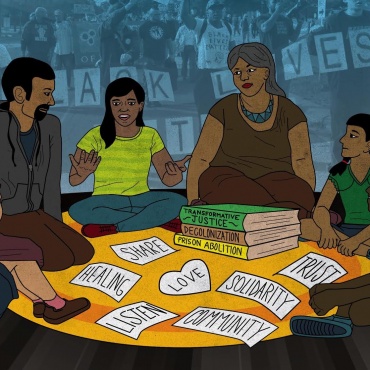
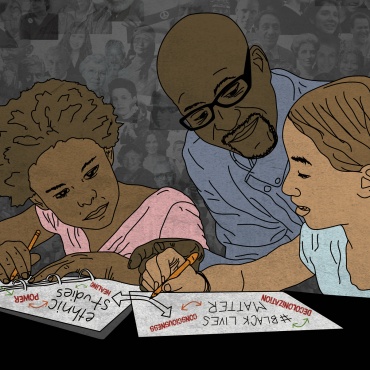
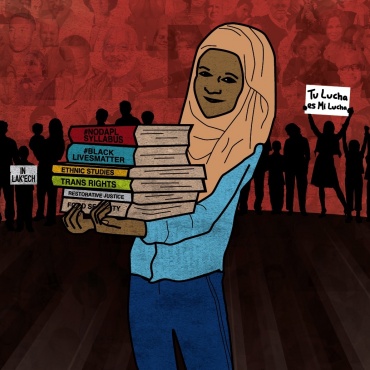
We are a national coalition of teachers, community activists, youth, researchers and parents who believe a good education should teach people—particularly low-income youth and youth of color—to understand and challenge the injustices their communities face.

We support each other in many ways:

EdLib Lab—an online “laboratory” for finding, discussing and developing social justice teaching materials. The lab features a searchable curriculum database that allows you to find materials, post your own or comment on others. We also publish the lab report, a monthly summary of the materials that are posted and host an occasional discussion series called talkin’ bout.

Virtual Community—our social networking site where you can create your own member profile, participate in online discussions, chat with fellow educators and read the latest headlines from the fight for a just education. You can also stay in touch via our listserv.

Free Minds, Free People—a national conference on liberatory education that took place in Chicago in 2007 and Houston in 2009.

Planning to Change the World—a lesson plan book for social justice teachers.

Social Justice Expo—a New York City expo for high school students doing social justice projects.

Research Database—a searchable collection of research materials related to Education for Liberation. You can also stay in touch with other researchers via the research listserv.

Log in


Forgot your password?
New user?
Our email list
Join us-- sign up for the Education for Liberation Network listserv!
 
Latest from EdLib Lab
The People v Leo Frank, a documentary written and directed by Ben Loeterman, brings to life one of the most fascinating criminal cases in American history: the 1913 murder of 13-year-old Mary Phagan, a child laborer in an Atlanta pencil factory, and the trial and lynching of Leo Frank, the Jewish factory supervisor from “up North” accused of her murder.
This is a study guide for the documentary, The People Speak, which presents a view of American history in motion, telling the stories of ordinary people who have defined democracy through their powerful words and actions.
Through this 350-page curriculum guide we want to challenge youth to think about a) the roots of violence in their lives; b) the enforcers and victims of violence; c) the effects of violence on both victims and perpetrators; and d) how violence can ultimately be minimized through systemic changes.